
- Subject Introduction
The Department of Neurosurgery
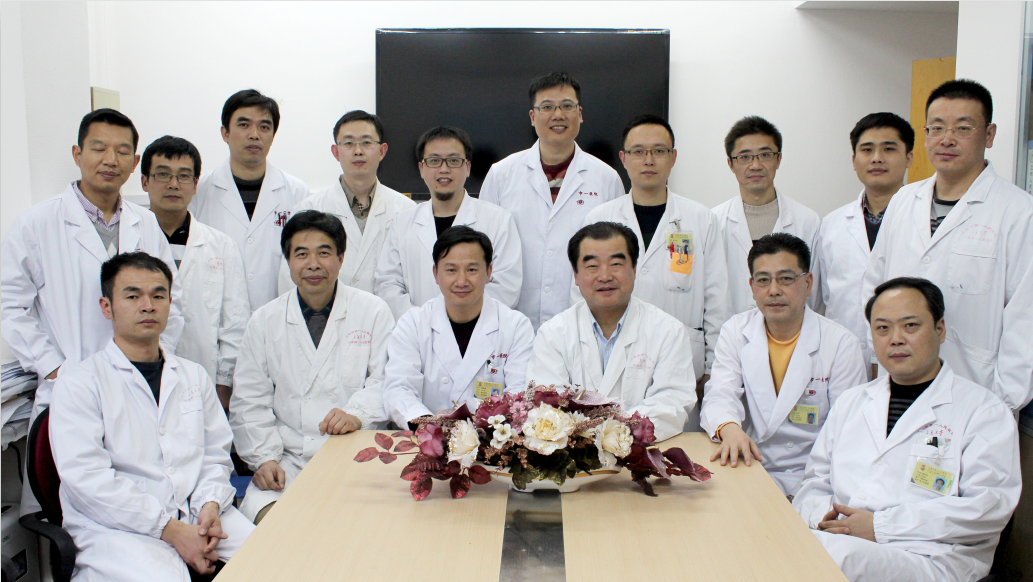
The Department of Neurosurgery of Shanghai General Hospital was founded in the 1960s by Professor Cai Baoxian, a well-known domestic pioneer of neurosurgery. Under the leadership of the previous directors Chen Daoli, Zhu Xiaojiang and current director Lou Meiqing, it has become a modern research-based discipline integrating medical, teaching and scientific research.
Neurosurgeons at our department are professional in treating neurological conditions using the latest innovative techniques in neurosurgery. At present, there are 22 doctors in the Department including five persons with senior professional title, ten persons with associate senior professional title, five persons with intermediate professional title, one doctoral supervisor and three master's supervisors. There are 98 beds in the Southern and Northern Branch. In 2013, it was qualified to grant the doctor's degree of Shanghai Jiao Tong University. The masters and doctors of the Department account for nearly 90%. The Department equipped with top-end microscope, neuroendoscopy system, neuronavigation system (infrared navigation, electromagnetic navigation), ultrasound knife, ultrasonic aspirator,nerve electrophysiology monitoring system and other world leading modern surgical equipment. Characterized by neural tumor, cerebrovascular disease and spinal neurosurgery and craniocerebral trauma, it has performed more than 10000 operations in recent years.
By integrating with the international neurosurgery concept and practice, it formed the feature of research-based minimally invasive neurosurgery combining microscope, endoscope, navigation, intervention and molecular diagnosis technology. It attaches great importance to team construction and talent cultivation and establish cooperation with US and Germany. It is specialized in minimally invasive surgery for the hypophysoma under the auxiliary navigation endoscope, individualized diagnosis and treatment of glioma, minimally invasive operation for acoustic neuroma, minimally invasive treatment of meningeoma; minimally invasive treatment of occipito-cervical deformity, spinal canal tumor, spinal neurosurgical disease; clipping or interventional treatment of arterial aneurysm, intracranial and extracranial bypass surgery for refractory arterial aneurysm, surgical and interventional treatment of vascular malformation, intracranial and extracranial synangiosis for moyamoya disease, internal carotid endarterectomy and stent implantation. The operations performed by this team have been broadcasted at the POWER OF SCIENCE of CCTV 13 for three times in succession and were highly appraised with the difficult technology, good effect and cutting-edge minimally invasive technology.
At present, it has won two Second Prizes for Shanghai Science and Technology Achievement, undertaken more than 10 scientific research projects including National Natural Science Fund and Shanghai Science and Technology Committee Fund, and published over 40 SCI papers.